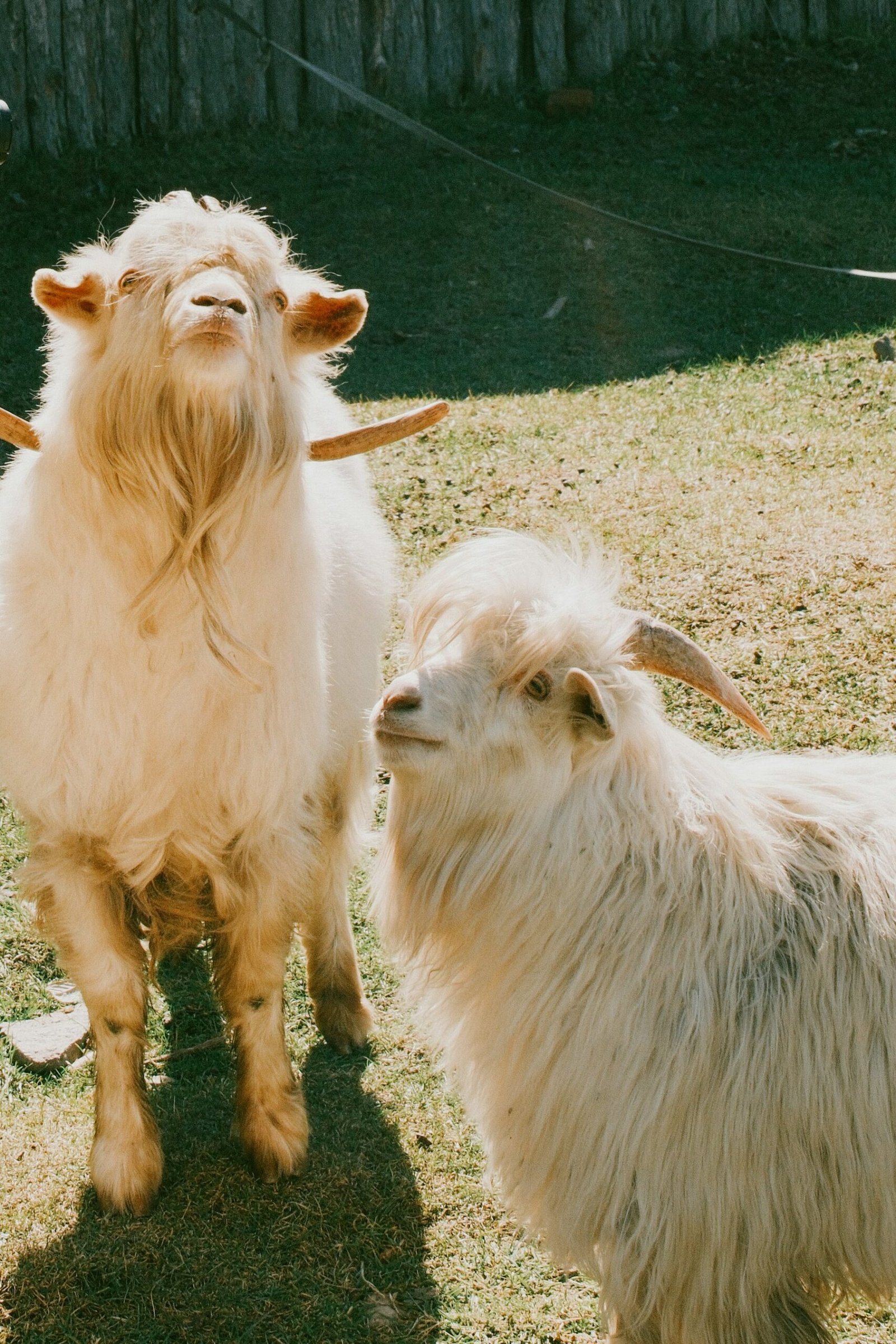
Cashmere is the fine, soft undercoat of the cashmere goat. Goats grow it in autumn to get through winter and shed it in spring. “Mongolian cashmere” means cashmere from goats raised on the Mongolian plateau, which covers the country of Mongolia and the Inner Mongolia region of China. Most of the world’s cashmere comes from this area.
Where cashmere comes from
A cashmere goat has two coats. The outer coat is long and coarse and keeps off rain and snow. Underneath is a layer of short, very fine down that traps warm air. That down is cashmere.
In spring, as the weather warms and the goats begin to shed, herders comb the down out by hand. What they collect is a mix of fine down and coarse guard hair. The mix then goes to a mill to be washed and “dehaired”, which separates the soft fibres from the coarse ones. Only the fine fibre is spun into yarn.

Why the Mongolian plateau?
Cold makes better cashmere. The plateau sits high and far from the sea, with long winters that can drop below −30°C. Goats there grow a thick, fine undercoat to survive. Herding goats on open grassland is also old, everyday work in the region, so the skills and the animals are already there.
Why cashmere costs more than wool
- Small yield. One goat gives a few hundred grams of raw down a year, and much less once the coarse hair is removed. A sheep can give several kilograms of wool.
- Hand work. Combing is done goat by goat.
- Dehairing. Separating fine fibres from coarse ones takes extra processing, and some fibre is lost.
Put together, it can take the down from several goats to make one scarf.
Cashmere, merino and wool: the difference
| Cashmere | Merino | Regular wool | |
|---|---|---|---|
| From | Goat undercoat | Merino sheep | Other sheep breeds |
| Feel | Very soft, light, warm | Soft, springy | Warm, can be scratchy |
| Fibre fineness | Finest | Fine | Coarser |
| Price | Highest | Middle | Lowest |
How to tell good cashmere from cheap
- Read the label. “Cashmere blend” or “cashmere feel” can mean a few per cent cashmere. Look for 100% and the fibre content written clearly.
- Look at the price. A 100% cashmere scarf for $30 is very unlikely. Real cashmere scarves in Australia usually start around $100.
- Hold it up to the light. A tight, even knit or weave lasts longer than a loose one.
- Expect some pilling. Most cashmere pills a little at first, where it rubs. Heavy pilling after one wear usually means short fibres.
Natural colours
Cashmere goats grow down in white, grey and several browns. Most cashmere is bleached and dyed afterwards to get a wider colour range. Undyed cashmere skips that step and keeps the colour the goat grew.
Our scarves are undyed: cream, camel, grey and brown. See the cashmere scarves (arriving April 2027).
Looking after it
Hand wash in cool water with wool wash. Don’t wring it; roll it in a towel to press out the water, then dry it flat in the shade. Fold it rather than hang it, and store it clean, because moths go for dirty wool.